Home Blog

PODCAST: AI is calling. How do you answer?

There is one CX trend so new, it didn’t even make it into our 2026 CX Trends report: AI agents calling contact centers on behalf of customers.

TTEC experts Alfredo Rizzo and JB Bednar discuss real-world examples that sound impossible until you hear the actual call recordings and reveal why CIOs and business leaders are responding with “immediate attention and a sense of urgency” when confronted with this rapidly evolving challenge.

Listen to the CX Pod episode, which is an excerpt of the full LinkedIn Live webinar, “Say goodbye to old-school CX in 2026.”

LISTEN ON SOUNDCLOUD:

TRANSCRIPT:

Liz Glagowski:

Hey, everyone. Welcome to the CX Pod. I’m your host, Liz Glagowski of the Customer Strategist Journal. Now, we at the Customer Strategist Journal recently released a CX Trends report with TTEC and TTEC Digital that focused on five trends that are really impacting customer experience for 2026.

As part of that, I just hosted a LinkedIn Live with our two experts from TTEC and TTEC Digital, Alfredo Rizzo and JB Bednar, about some of the trends and what they’re seeing out of the market. So for this podcast, I wanted to take an excerpt where they focused on a really key part of agentic AI that actually is too new to even appear in the paper that got released back in November.

AI is calling into the contact center and acting on behalf of customers in a lot of different ways that maybe some people aren’t prepared for. So we had a great conversation around that topic, and it’s excerpted here. Like I mentioned, this is just one excerpt of a larger conversation, so head on over to ttec.com or ttecdigital.com to check out the full LinkedIn Live event, as well as download the CX Trends report. Okay, everyone, happy listening.

Liz Glagowski:

So one final question. I know we’ve had a great conversation so far, just to wrap it up. we published this paper in November, and things move so quickly that I’m sure the landscape’s changed even since then. So can you tell us one thing that has popped up on your radar that’s a new hot topic, maybe since we even went live with the report in November? JB, I think you can start with this one.

JB Bednar:

Oh, yeah. There’s definitely a couple of hot ones in. Boy, I mean, I don’t think the shelf life on any any research is good past a month or two these days. There’s an important one, I think, is a trend that we’re starting to see that’s pretty material. If you Google, you know, AI is calling and tech, you’ll see some of the white papers and work we’re doing on this now. But it’s this idea that you know, customers are using AI as well, right? Google is promoting tools, you know, and customers have access to ChatGPT and Claude and other technologies just the same.

We’re starting to see consumers use these AI technologies to engage with brands so that, you know, our contact center associates are engaging with AI agents that represent the consumers. This is a real trend. We are seeing this today.

We’ve got clients today in the healthcare space where, you know, in B2B scenarios, healthcare payers are using AI agents to, you know, confirm benefits for a patient or to get, you know, a pre-authentic procedure, things like that, where our agents are now being faced with you know, an inbound call, they may be dealing with customers, but now they’re also dealing with AI agents.

And I think that’s definitely going to be an important one, especially around areas where maybe, maybe you can’t control that. I think it’s going to be, it’s really an area where I think it’s going to throw a lot of companies for a loop, because now it means how do we, how do we prepare our agents for working with bots? How do we validate customers? How do we get consent? How do we make our knowledge base material or our transaction, our transactional systems available to external agents?

I mean, that’s a that’s a complete 360. Nobody saw it coming change for a lot of brands and a lot of contact centers. You know, there’s even the fraud potential of that is so high. So You know, we’ve all thought that, hey, we’re gonna replace the contact center agents with AI, and customers are gonna talk to AI, but we’re also seeing the opposite, right? We’re not talking to customers anymore, we’re talking to a customer’s AI agent. So, you know, I don’t know, Alfredo, do you have, I’m sure you’ve got a pretty good perspective. You’ve been working on this one for a long time as well.

Alfredo Rizzo:

We have like a year, I mean, this is such a hot topic, and I’ll say that the reaction we get when we start talking about this with CIOs and line of business leaders at our clients, is just like immediate attention and sense of urgency understanding. They say, whoa, this can snowball so quickly. It’s just like, their next question to us is, what are you going to do about it for me? Right? Like, How are you going to help me with this? is going to be big. You know, we’ve seen, you can probably just Google this out there, but there are people talking about the next version of the internet.

It’s not going to be built for humans. It’s going to be built for machines, meaning AI assistants. So if you’re a brand that wants to be found, it’s not going to be a human finding you. It’s going to be an AI assistant working on behalf of a human consumer. to do something.

People are not going to be necessarily looking at your website and downloading your app. They are going to be going to ChatGPT and Gemini and Claude and Grok and saying, you do it for me. You book my travel. You go on this travel site where I have an account, pick one, and I need to go to these places with these people and have these experiences, and I want to fly this way and do this, and I need cars, whatever, and just do it all for me. I’ve got your credentials with this travel site, so it’s all in your shopping cart. Please review and tell me if you like. Oh, I like it. Okay, if you want to give me your credit card, I’ll buy it for you. Or else you can log into the site and do it yourself. So that is happening right now. And the Center for Human Consumers to Action is going to shift. right, into these AI assistants.

And so it’s not going to stop with the example I just gave. It’s going to continue very much into, well, there is no digital way to do this, call them. Call the brand and do it. So we are seeing clients reach out to us. In the summer, we had a major financial services client that reached out to us and said, hey, have you been seeing this? And we’re like, yep, we’ve been seeing it.

We just had an AI assistant call us to negotiate that settlement on behalf of a customer. And at first we thought it might be fraud, but nope, every authentication question we asked for, you know, 2 minutes, the AI is infinitely patient and answered them all. It had all the goods. Maybe there was a human behind it because we even asked it out of wallet questions and it had the authentication. So then we were like, the human agent was confused.

Should I service this or not? OK, we decided to go ahead and service it. So we actually worked with the AI assistant for 20 minutes to negotiate a payment plan on this loan. And this was an expert negotiator. They were able to lower the settlement amount from what was owed, keep the company from referring the customer to credit bureaus, and so on and so forth. This had been expertly trained to do that negotiation task on behalf of human consumers by calling into companies, building a strategy for who we’re going to call first, how much disposable income you have, and so on and so forth.

And that was certainly an eye-opener because it’s no longer just Google calling for dinner table reservations. It’s now moving up the value chain of use cases, right? Think about an expert negotiator working on your behalf. So this is real. This is going to come fast. And we need to have a strategy for do we even service it? How do we determine good and bad AI that’s calling us? What do we do about it? Are these decisions that we have with AI on behalf of human customers legally binding? And do they hold water long-term? What is our position? So we need to start thinking about this. So yeah.

JB Bednar:

I’ve got one more to share on that point because you shared that example and I would not have believed it if I did not listen to this actual call myself. but was listening to one of these AI calls and the agent didn’t break character.

At about the midpoint of the call, the agent started to get a bit cautious, right? Because it was clearly not quite a person. Maybe it was the first time one of these agents had taken one of these calls and they started to push back on some of the AI questions.

And the AI asked to speak to a supervisor. I’m not kidding you.

Now, look, somebody programmed this thing to do it. Literally, the AI saying, OK, I’m not achieving the goal that I was developed to achieve. This agent is putting up a roadblock. I’m going to ask for a supervisor. It’s crazy. But imagine how agent training has to change now.

There was a question in here around fraud from Catherine. You know, now we’re expecting a lot of agents to be able to identify a deep fake or a fake voice or to suss out an interaction that might not quite seem perfect and then do that. That’s challenging to do at scale. It’s not easy to identify these voices if you don’t listen to them all day long as being AI generated.

Alfredo Rizzo:

Yeah, I think we’re going to have to shift, JB, from not just thinking about customer experience. I’m going to coin a term here. We’re going to have to think about machine experience. What machine experience are we building for the AI agents that are going to act on behalf of our customers? How are we going to say they can do everything that a customer is authorized to do with their bank account, for example, or insurance policy? right? Or healthcare appointments and records and so on. Or maybe not.

Maybe the human customer has to delegate permissions to the AI agent. There has to be a framework to tell the company, the service provider, the brand, you know, this permission has been delegated. You can deal with my AI agent for this, but not everything that I can do as a human, right? So This is going to be rapidly evolving. I think this is gonna be something we’re gonna be focusing on quite a bit this year.

There was another great example I had with one of our clients where they were struggling because customers were calling and saying, ChatGPT gave me this instruction. of how to fix my problem, which was wrong. And it turns out that ChatGPT had, you know, crawled the database, the knowledge base of this client a year ago. And its knowledge, its corpus of information was a year old knowledge base data. But customers expected that if I’m going to ask how to fix this product problem, I’m going to get the perfect answer from ChatGPT, not a year old answer.

This is not a problem any of us have ever had to deal with historically, right? We would expect, well, a customer’s going to come to the knowledge base. It’s going to be up to date. Now we’re seeing people use, you know, Google, AI search, Claude, ChatGPT in lieu of, or as the first line for customer experience. How do we make sure that AI agents that we don’t even control are giving our customers the right information? That’s a different paradigm entirely.

At NRF, the customer is still king – but now AI is the concierge

AI is at the forefront of most retailers’ strategies for the year ahead, as rapid advances unlock new opportunities but also bring some questions and challenges.

It’s no surprise, then, that AI dominated the conversation at the National Retail Federation’s Big Show in New York City, held January 11–13. The industry’s largest global event drew more than 40,000 attendees — many of them focused squarely on one question: how to make AI work for their business.

If last year was about harnessing the power of AI to automate back-office tasks, 2026 will be the year AI moves to the front and center of customer-facing interactions, predicted Richard Koo, partner at venture capital firm DNX Venture.

Speakers and attendees at the National Retail Federation Big Show in New York City, Jan. 11, 2026. Photos by Elizabeth Glagowski

Agentic commerce poised to take center stage
There are always a few buzzwords or phrases that seem to dominate conversations at NRF and “agentic commerce” was one of them this year. Leaders of multiple brands spoke of the growing impact they expect agentic AI to have this year and how it will change the way they do business.

They have good reason to obsess about AI. This holiday season, generative AI tools drove a nearly 700% increase in traffic to retail sites compared to last year, according to research from Adobe Analytics. What’s more, AI and agents influenced 20% of all holiday retail sales, or $262 billion in revenues, according to Salesforce research.

“Our belief is that AI doesn’t have to make the world more mechanical,” said Soumia Hadjali, global senior vice president of client development, digital and omnichannel at luxury retailer Louis Vuitton. “It can make it more human” by using context and data to deepen connection and customer intimacy. She discussed an environment where agentic digital concierges work in parallel with client advisors, who can focus on high-value customers or ones who require a specific approach.

Agentic AI’s effect on retail is two-fold: shoppers are increasingly using agentic AI to shop on their behalf, which companies need to prepare for and strategize around, and companies are experimenting with how agentic AI can make operations more efficient on the back end.

Right now, agentic commerce is evolutionary – but as adoption scales, the retail industry seems to be heading toward a tipping point when it could become revolutionary, said Jose Gomes, vice president of retail and consumer at Google Cloud.

Home Depot is expanding its “Magic Apron” tool to incorporate more agentic AI. What began as a generative AI tool intended to answer customer questions and provide product reviews is expanding its capabilities to be more predictive, according to Jordan Broggi, the chain’s executive vice president of customer experience and online.

Newer agentic AI-powered features, he said, will look not just at the items customers are buying but at what projects they are undertaking. This more holistic view of what customers want to accomplish will let the retailer proactively suggest items that meet customers’ needs.

As long-standing retailers try to meet the changing preferences of modern shoppers, new companies are stepping in to help.

ReFiBuy, a company founded in 2025 and featured at NRF’s Innovators Showcase, helps retailers and brands prepare for this next wave. It’s an agentic-native platform that maps retailers’ online content so it’s discoverable by generative AI. As consumer habits evolve, companies need to be optimizing content for agentic commerce, said CEO and co-founder Scot Wingo.

Where AI is showing up in retail, right now
Beyond just agentic, conversations about AI dominated much of the expo floor displays and panel discussions at NRF.

The philosophy at Macys Inc. is to start with the customer and create stories worth sharing that build trust and relationships, said Max Magni, the retailer’s chief experience and digital officer. “We embrace AI. It helps us listen to customers, better personalize at scale, and give customers what they want.”

He added that if the technology doesn’t help support storytelling, they won’t use it. It must be right for the brand.

Mandeep Bhatia, senior vice president of global product and omnichannel innovation at Tapestry Inc., said the company – which owns brands including Coach and Kate Spade – recently began using an AI-powered platform that gives in-store employees and managers real-time visibility into what products are selling, how the store stacks up against its key KPIs, and how it compares to other stores within the company.

Happy employees lead to happy customers, he said, so the company’s AI investments are largely focused on making store associates’ jobs easier.

“Associates are at the heart of our business,” he said. He predicted that “anything that can be automated, ultimately, will be automated” so brands should look for ways to boost efficiency and remove friction with AI without sacrificing customer experience along the way.

Another luxury brand, Ralph Lauren, is using conversational AI to deliver more personalized experiences to shoppers. Chief Branding and Innovation Officer David Lauren spoke of the growing role AI plays for the brand, including its “Ask Ralph” tool that helps shoppers craft and buy the perfect outfit.

The brand’s mission has always been to help customers look and feel their best, he said.

“Technology has been the most incredible tool for us to take that idea and make it relevant for a new generation,” he added.

Matthew Shay, NRF President and CEO, agreed and asserted that even for luxury brands, “the phone is the new flagship store.”

The customer is still the heart of retail   
Technological advances are exciting, but retail leaders kept reiterating that the customer journey – not the latest tech or gadget – remains their core focus.

“Technology for technology’s sake is a fool’s errand,” said Shelley Bransten, corporate vice president of worldwide industry solutions at Microsoft. “You need to start with a vision.”

That sentiment echoed across various retail industries.

“Our job is really to figure out how we put the customer at the center of everything we do,” said Yael Cosset, executive vice president and chief digital and technology officer at grocery chain Kroger. “If you can’t simply articulate why it’s beneficial for the customer, don’t do it.”

Even as AI’s role grows, there will always be parts of the retail experience that will remain innately human, Home Depot’s Broggi said. The smell of sawdust when shoppers enter a Home Depot store, or the building workshops stores host for kids, are key parts of the brand’s culture.

“If we can take out the hard part of retail but keep the fun part of retail, that’s where I hope [AI] ends up,” he said.

* Editor-in-Chief Elizabeth Glagowski contributed to this article.

Customer Strategist Journal wrapped: CX’s hot topics of 2025

With 2026 quickly approaching, we at the Customer Strategist Journal are reflecting on the past year. 

Every month, we showed up in CX leaders’ inboxes with insights, real-world stories, and expert perspectives. Throughout the year, that added up to 17 thought leadership articles and a lot of great conversations. Thanks for reading, sharing, and engaging. 

We asked AI to help surface the trends and strategies we kept coming back to this year. These are the trends and strategies that showed up most in our CX conversations in 2025.

The CX topics that defined our year

  • CX in the Age of AI. We dove into how AI is shaping traditional CX, including empathy, frontline augmentation, and adoption at scale; as well as practical insights into where AI does (and doesn’t) work.
  • Strategy over technology alone. We discussed how tech alone doesn’t facilitate or fix transformation; leadership, strategy, and people matter. And in times of economic uncertainty, strategic investments are critical.
  • Human elements of CX. We examined empathy’s evolving role in the contact center and how what matters isn’t just warmth, it’s effective service. Even as technology evolves, human experiences are still what differentiates brands.
  • Trust and security as CX imperatives. The importance of a strong anti-fraud strategy leapt to the forefront of conversations – because fraud prevention isn’t just tech; it enables trust and protects value.
  • Market trends and seasonal peaks. Our “CX Trends 2026: Fast Forward” report outlined what brands should focus on to succeed in 2026 and beyond. We also looked at AI’s role during times like retail’s peak demand period.

Our top real-world advice for brands

  • Balance AI with human judgement
  • Treat CX strategy as a core business strategy
  • Fix transformation pitfalls
  • Innovate operational practices
  • Build trust through security
  • Embrace human-centric CX
  • Reframe friction points as opportunities
  • Embrace trends and seasonality

We can’t wait to keep the conversations going in 2026. If you’re not already subscribed to our monthly Customer Strategist Journal newsletter, what are you waiting for? Subscribe here

Get Ready for CX 2026: Agile. Agentic. Unstoppable.

Retro vibes might be cool when it comes to fashion, music, even décor – but they aren’t when it comes to customer experience (CX).  

The world seems like it’s moving faster than ever: technology is evolving, customer expectations are rising, and economic uncertainty is rewriting the rules. If you’re confused about where to invest, don’t understand the economics of AI, or are afraid to act, you’re not alone.  

But don’t let uncertainty paralyze you. If your CX stays stuck in the past, you’re not just behind; you’re losing customer loyalty and revenue by the day.  

Our trends report, CX Trends 2026: Fast Forward, developed with TTEC, is here to help you embrace the future with confidence – because yesterday’s roadblocks and outdated thinking won’t cut it anymore. 

Here are some of the insights informing our 2026 CX trends: 

Some things age well. Outdated CX doesn’t.  

Agentic AI becomes standard  

AI that acts on its own will play a key role in the next era of CX, but it must be rooted in strong data if it’s going to succeed.  

Agentic AI made the trends list last year, but this year will evolve beyond “answer this question” to “accomplish this objective.” It will be autonomously deciding steps, using tools, and iterating based on results.  

For most brands, initial use cases will start in the back office. Agentic AI will become more customer-facing as companies’ AI-readiness matures.  

To earn customer trust in agentic AI, brands need to show it works and is safe. That starts with clean, curated, and continuously updated data, and means applying agentic AI to the appropriate tasks (not edge cases) to ensure it is reliable.  

CX’s future will be built on resilience  

The world’s changing quickly and brands that wait to respond to challenges are already behind. Companies that thrive aren’t reactive; they’re agile.  

Reacting costs time, money, and headaches. In 2026, winning brands will anticipate, adapt, and pivot seamlessly. Invest in technology that helps you become more agile without sacrificing along the way.  

The right people and technology make it possible to shift CX from reacting to anticipating — and in a world of rising customer expectations, that shift is essential. 

The CX landscape is expanding, and global opportunities abound. Overcome limited internal bandwidth by tapping into offshore hubs like South Africa, Colombia, the Philippines, and India that offer onshore-level CX quality at significant cost savings. The work-at-home revolution also opens access to a global labor pool, letting you scale faster and smarter. 

People are a crucial part of the equation, but need to be empowered with the right technology. Set your teams up for success with AI-powered insights that help them understand customer habits, spot patterns, and identify roadblocks in real time. This will evolve CX from reactive to proactive. 

Intelligent automation should also play a key role. From fraud prevention to operational efficiency, proactive automation solves problems before they happen – instead of cleaning up after them. 

To read more about this and the other CX trends we’re predicting, check out our trends report, CX Trends 2026: Fast Forward.”  

AI reshapes holiday shopping this year

Robot arm putting wrapped gifts into a sleigh

Waking up early and waiting in line outside a store for a must-have gift might be a thing of the past. This year, consumers – especially younger ones – are turning to AI to navigate the busiest shopping season of the year. 

One-third of consumers plan to use AI for holiday shopping this year,  according to new UserTesting research. The company surveyed 4,000 consumers across the United States, United Kingdom and Australia to gauge how consumers will navigate Black Friday and the holiday season against a backdrop of inflation, tariffs, and economic uncertainty.

AI usage will be higher among younger shoppers, with 56% of Gen Zers and 50% of Millennials planning to use it. 

Shoppers say they’ll use AI for brainstorming gift ideas, finding the lowest prices, getting direct product links, and checking whether a deal is truly worthwhile. 

“Think of AI as the holiday sidekick we didn’t know we needed,” Bobby Meixner, vice president of solution marketing at UserTesting, said in a statement. “It’s giving shoppers fresh ideas, uncovering smarter deals, and helping them put more meaning into every gift.”

Shoppers trust AI, but remain cautious

For many, AI has become a trusted advisor when it comes to making purchases. The survey found 64% of consumers trust AI tools as much as, or more than, friends and family for gifting advice. And more than half of respondents said AI eases the stress and fatigue of holiday shopping.

Most shoppers believe AI will transform how they shop within the next three years. And 74% of those who have used AI for gift advice said it has made them better gift-givers. 

But even as more shoppers embrace AI, some concerns persist. A quarter of consumers said they worry about data privacy, 19% worry about scams, and 19% worry about the lack of human touch. 

CX Pod: Apple’s $2 billion lesson in fraud prevention

The CX Pod focuses on innovations happening within the world of customer experience, and there’s no other innovation more important than AI. So rather than just talk about AI as a concept, we are going to provide some real examples and use AI within this podcast.

This is the first of our AI produced podcasts that summarize and provide context to our Customer Strategist Journal content, and more.

We’ll be using Google’s NotebookLM tool, which is a great resource featuring two voices having a conversation about a specific topic.

Let us know what you think. Is it too creepy? Is it great and worthwhile? Or what other comments do you have? We’d love to hear them. 

(Email elizabeth.glagowski@1to1.com to share your thoughts).

So here’s our AI-generated content ,originally written by Philip Say, and appeared in the July 20, 25 issue of the Customer Strategist Journal.

The following was generated by AI (Google NotebookLM):

TRANSCRIPT

Liz Glagowski:

Today we’re taking a close look at something that really touches every digital interaction we have fraud prevention. Apple recently shared some well, pretty remarkable numbers about their efforts.

They blocked an incredible $2 billion in fraudulent transactions last year alone, 2 billion just staggering. Yeah. And that brings their five year total to an astounding $9 billion thwarted. It’s a really compelling case study, I think, for any leader out there. Absolutely. And, you know, while that might just sound like another corporate announcement from, well, a tech giant, it actually offers far more significant, really actionable lessons for you, the listener, especially if you’re an enterprise leader grappling with digital trust and security.

This isn’t just about big tech’s bottom line. You know, it’s really about these hidden, constant battles behind, well, every single digital transaction we make every day. Okay, let’s really try and unpack this. The sheer scale Apple is operating on here is huge. We’re talking about a system handling transactions for what is it, over 813 million weekly visitors? Yeah, eight under 13 million weekly across 175 global regions.

So it’s not just a small problem they’re tackling. It’s like an ongoing global siege almost exactly. And what’s fascinating here, I think, is the sheer volume of malicious activity they’re actually dealing with right now. In just one year, they block nearly 2 million risky app submissions, 2 million apps. Wow. And terminated 146,000 developer accounts. Okay. And then on the customer side, they rejected a staggering 711 million fraudulent customer account attempts.

Just got 711 million attempts. Yeah, that’s incredible. And it doesn’t stop there. They blocked over 10,000 illegitimate apps on, like pirate storefronts. Yeah, those dodgy ones. Exactly. And stopped nearly 4.6 million attempts to install unauthorized apps through those kinds of channels. That’s a truly staggering amount of activity they’re fending off. But what’s really striking you mentioned this is how this battle goes far beyond just, you know, simple payment theft.

Oh, absolutely. What are the broader implications when these bad actors aren’t just after the money? That’s an excellent point, because this battle, it’s really multi vector. Mm. These bad actors, they’re trying to steal personal data, create fraudulent accounts for other purposes, and even distribute pirated apps containing, well, everything from malware to pornography and gambling content. So a whole range of nasty stuff.

Exactly. So this vigilance, it matters so profoundly because when fraud succeeds, everyone pays the price, right? Yeah. Legitimate businesses lose significant revenue. Consumers, well, they lose confidence in the platforms they use every day, which is huge. And those platforms in turn lose credibility. So Apple’s success here isn’t just about protecting its own revenue streams. It’s fundamentally about maintaining trust across an entire vast digital ecosystem.

And speaking of trust, it’s interesting to consider the strategic timing of Apple’s announcement here, right? It wasn’t just coincidental, was it, coming just days before their big developer conference, WWDC 2025? Yeah, And specifically right after that, Epic Games Legal victory. Exactly. That ruling prompted a lot of developers to seriously think about alternative payment methods, you know, outside of Apple’s system.

Yeah. And if we connect this to the bigger picture, Apple’s announcement, it suddenly reveals what you could call the invisible value. Its platform provides invisible value. Explain that a bit. 

What’s fascinating here is that early data from companies like Revenue CAP, it suggests that many small businesses are actually unlikely to financially benefit much from switching to their own payment systems.

Really? Why is that? The primary reason seems to be the unexpected and often substantial fraud related costs and complexities. They’d suddenly have to manage themselves. Okay, so imagine you’re a small indie developer, right? Suddenly you’re faced with managing potentially millions in transactions and all the fraud risk that comes with it. Yeah, exactly. That’s the cold reality many are probably considering.

It really makes you wonder what other invisible value might you be benefiting from in other services or platforms you use every day, Things you might not have fully accounted for or maybe even realized was there in the first place? It’s a great question. So, okay, what does this all mean then, for your enterprise, for your leadership? It seems Apple’s anti-fraud success gives us, what, five critical lessons?

Lessons that are pretty universally applicable, I guess, regardless of your industry or scale. That’s right. Five key lessons. And the first one is crucial. Fraud prevention must be treated as core infrastructure. Core infrastructure, not just a cost center. Exactly. Apple clearly views it not as some necessary evil or cost, but as a fundamental competitive advantage. Think of it like a really robust foundation for a skyscraper.

Okay? You don’t skimp on it, right? Yeah, because it enables all the growth and innovation happening above ground. It maintains customer trust and operational efficiency. That’s a powerful analogy. So it’s not just about stopping losses, then it’s really about enabling growth. But, you know, for many leaders, fraud prevention probably still feels like a drain on resources. What’s the biggest mental shift needed to really embrace this essential infrastructure mindset?

That’s a challenge for sure. It requires seeing the long term value, the trust dividend, which leads us, I guess, right into lesson number two scale amplifies both opportunity and risk. Yeah, it’s a double edged sword. Obviously, Apple’s massive scale, you know, processing billions and transactions makes them an incredibly attractive target for fraudsters. That’s the risk part, huge target.

But then on the flip side, that exact same scale provides this enormous dataset, the raw material essentially to build those incredibly sophisticated detection systems. That’s the opportunity, right? The more data, the smarter the system can potentially get. So for any enterprise, it’s a reminder, isn’t it? As you grow and succeed, you should anticipate a proportional increase in fraud attention.

You really need to plan for it from day one, not just react when it happens. You absolutely do. Which brings us to our third lesson Multilayer defense is non-negotiable, multi-layered. So not just one big wall. No, definitely not. Yeah, Apple’s approach is really comprehensive. Think of it maybe like different security checkpoints in an airport. Okay. Like that, right.

There’s a check when you book your ticket that’s like account creation. Another when you check your bag app submission, a scan at security transaction processing makes sense and even monitoring for suspicious behavior once you’re on the plane, that’s post-transaction monitoring. So the point is enterprises need similarly robust, comprehensive strategies. You have to address fraud across all customer touchpoints, not just tack on payment processing security at the very end.

That makes perfect sense. It’s not a single point of failure, but a series of defenses. But for a smaller company, or maybe one that’s growing really fast, how do you even begin to identify all those potential touch points where fraud might occur, let alone build out a defense for each one? That sounds complex. It is complex, no doubt.

It requires really mapping the customer journey and thinking like a fraudster where the weak points. But it’s essential work right? And that point about the unseen benefits Apple provides, that really underscores lesson number four. Be aware of the hidden costs of going it alone. Yes, this is critical. The whole Epic Games situation really highlighted how seemingly expensive intermediaries like Apple’s App Store often provide this immense off invisible value like fraud prevention.

Exactly. So before you decide to, say build internal capabilities or switch providers because it looks cheaper on the surface, yeah, you absolutely need to fully quantify the total cost of ownership. Total cost meaning? Meaning factoring in not just the potential fraud losses you’ll now absorb, but also the operational overhead, the engineers, the analysts, the time and resources you divert from your core business.

Precisely. And even the opportunity costs. What could you have built if you weren’t fighting fraud fighters? That’s a sobering calculation for many. I bet it can be. And finally, that brings us to lesson number five. Trust acts as a powerful competitive moat, a moat like protecting a castle, essentially. Yes. Apple’s significant ongoing fraud prevention efforts create this powerful barrier around their ecosystem.

The more secure their platform is perceived to be, the more valuable it becomes Exactly to both developers who want a safe environment for their apps and for consumers who trust making transactions there. So the investment pays off in loyalty and usage. It does. And this means that investing strategically in security and fraud prevention can similarly differentiate your business in competitive markets.

It builds that long term customer loyalty. It becomes part of your brand promise. That’s a powerful idea. Building trust is a competitive moat. But again, for a smaller company, how do you even begin to measure that trust or, you know, know where to invest smartly to build that kind of barrier effectively, especially without Apple’s kind of resources? That’s the challenge, right?

It starts with prioritizing customer security, being transparent and investing proportionately. Even small steps Build trust over time. You don’t need Apple’s budget to make security a core value. Okay. So if we sort of connect all these lessons back to your broader context, the listeners context. Yeah. In this era where digital transformation is just constantly accelerating business processes, but also expanding the attack surface and massively expanding them.

Fraud prevention isn’t just some operational requirement anymore, is it? It’s rapidly becoming a core strategic capability for any enterprise that wants to thrive, not just, you know, survive. Absolutely. And this raises, I think, a really important question now. It’s no longer really about whether to invest in fraud prevention. Right. That ship has sailed. Pretty much. It’s about how to invest intelligently, because effective fraud prevention requires significant ongoing investment.

It needs sophisticated technology, yes, but also deep operational commitment. It’s not a one and done thing. Not at all. And the alternative just hoping for the best, exposing your business and your customers to potentially billions in losses. It’s ultimately far, far more expensive in the long run. It really shifts the perspective, doesn’t it? The companies that are truly thriving in this digital economy, they seem to be the ones that, like Apple, recognize fraud prevention as truly essential infrastructure.

Yes, what enables growth, it truly protects customers and ultimately it creates those sustainable competitive advantages we talked about. Well said. So I guess the core takeaway from today’s deep dive is pretty clear. Security isn’t just about protection anymore. It’s fundamentally about enabling prosperity. That’s a great way to put it, that $2 billion in potential fraud Apple blocked last year, that represents $2 billion that stayed in the pockets of legitimate businesses and consumers actually fueling the ecosystem, not draining it.

Exactly. Money that went where it was supposed to go. Right. So maybe for you, the listener, a final provocative thought to consider as we wrap up. How might you begin to quantify the invisible value of security and trust within your own digital interactions or maybe within your own business? How do you move beyond viewing it merely as a cost and start seeing it really seeing it as an investment in growth and stability?

That’s a great question to ponder. We really encourage you to reflect on these insights and perhaps delve deeper into your own digital security strategies. 

Liz Glagowski:

Thanks for joining us for this deep dive. Thanks for listening. We’d love to know what you think about these AI produced podcasts and you can learn more about customer experience from TTEC.com or CustomerStrategistJournal.com.

Thanks again. Have a great day.

The economy’s uncertain – your CX strategy shouldn’t be

When economic headwinds arise and the future is uncertain, many brands quickly look to cut spending – and the contact center becomes the main target. Often viewed as a cost center, the contact center often seems like the easiest place to cut expenses – but that can be a costly mistake.

Customer experience (CX) suffers when handle times grow and resolution rates drop, so brands must consider: is it worth cutting costs in the cost center if it’s going to damage brand reputation, frustrate customers and associates alike, and increase churn?

It’s a tricky balance CX organizations must strike, especially when: 

  • Costs are rising, impacted by inflation and new economic variables
  • Achieving great service quality with tighter budgets has never been harder
  • Internal teams are stretched too thin, with limited bandwidth
  • Supply chain issues and workforce gaps strain CX delivery

To navigate a challenging economy, companies must adapt quickly, improve efficiency, reduce costs, and maintain strong customer experience. With the right tools, people, and strategy, it’s possible to ride out economic headwinds without sacrificing CX.

Make smarter decisions with AI-driven insights

Few things are more costly than uncertainty. When brands aren’t sure where inefficiencies lie, what to do about them, or which tools can help, it costs them time, money, and a lot of headaches.

AI-powered insights can eliminate guesswork and gauge exactly how customers are feeling and how associates are performing, in real time.

Use conversational intelligence to listen to and analyze 100% of interactions. Traditional quality assurance tools capture less than 3% of customer interactions, so brands still relying on those are missing out on valuable insights. New AI-powered tools can listen to conversations, detect when customer sentiment shifts, and even prompt associates with best next steps.

The more brands can understand customers, what they’re looking to achieve, what delights them, and what frustrates them, the better they can meet customers’ needs quickly and improve satisfaction and loyalty. AI-enhanced insights should play a key role in any CX strategy.

Insights don’t just benefit customers; they can improve experience and performance for associates, too. Implement tools that give associates and team leads access to real-time performance data

With the right AI-powered solutions, team leads get a clear view of where associates are succeeding and struggling, so successes can be replicated and training can be improved and customized as needed. AI also can give associates a holistic view, via real-time dashboards, of their performance compared to benchmarks, goals, and their peers. Having this visibility into their performance can incentivize associates and help them identify strengths and weaknesses.

Associate coaching becomes much more efficient when it’s guided by insights instead of trial and error. A major automaker made its coaching process 53% faster with AI-powered insights. 

Take a fresh look at offshoring 

Today’s outsourced CX markets are very different than the traditional call center of the past. Brands still clinging to an outdated view of offshoring should reconsider.

Offshore centers in the Philippines and India – along with emerging regions like South AfricaRwanda, and Egypt – let companies tap into a highly skilled workforce while uncovering significant cost savings. With an educated labor pool and AI-powered tools, these sites offer the same quality CX as onshore centers, at a substantially lower cost.

Traditionally, many brands have struggled to find support in languages they need. The result? Many choose CX locations primarily for language, even if those sites don’t best fit their overall needs. But AI is helping to break down communication barriers.

Real-time accent softening and noise cancellation, for instance, help customers and associates communicate easily, regardless of where in the world they are located. And AI-powered voice translation has evolved to the point where it can serve dozens of languages in real time, translating conversations between associates and customers in less than a second. 

These tools are opening the CX world up for brands, geographically and figuratively. 

When a major U.S.-based retailer that sells home fitness equipment struggled to keep up with surges in demand around the holiday season, a team of 50 associates based in the Philippines generated 60% cost savings

No matter where associates are based, harness the power of AI to put the information they need at their fingertips. AI-powered knowledgebases ensure they have quick and easy access to documents and answers they need for fast resolutions.

Give customers the tools to self-serve

In this economy, some brands are seeing an influx of inquiries to the contact center. Deflect the more simple, straightforward ones to chatbots, virtual IVRs, and other self-service tools

Customers are increasingly comfortable interacting with AI agents and bots, as long as they can easily resolve issues, and self-service lets them find the answers they need on their own time.  

According to research by Zendesk

  • Almost one-half of customers think AI agents can be empathetic during interactions
  • 70% of CX leaders believe chatbots are becoming skilled architects of highly personalized customer journeys
  • 69% of organizations believe generative AI can help humanize digital interactions

As AI agents and bots become more sophisticated and customers grow more comfortable interacting with them, it makes sense to delegate simple tasks to automation and free up associates to focus on nuanced interactions that require a human touch. 

With the right automation, companies have cut cost-per-contact by 50% and reached near-perfect CSAT

Turn change into a CX advantage

Navigating an uncertain economy can be daunting, especially when customer satisfaction and loyalty are on the line and financial pressures are mounting. It may be tempting to make quick decisions that seem like they’ll cut costs and boost efficiencies. But a more thoughtful strategy that prioritizes CX will pay off in the long run.

Tap into expert guidance to make the most of economic unpredictability. Working with a proven CX partner is an easy and cost-effective way to quickly gain access to the global workforce, cutting-edge AI tools, and proven best practices you need to thrive in any economy. 

Holiday Inn Club Vacations reimagines CX with customer-centric approach

Timeshare companies sometimes get a bad rap as not being particularly customer centric. Many consumers associate them with high-pressure sales tactics meant to feed a volume business, rather than crafting hyper-personalized experiences that build loyalty. But Holiday Inn Club Vacations embraces a different philosophy.

Nicole Myers acknowledges the preconceptions people may have but, as vice president of customer experience for the brand, she leads a team devoted to elevating CX every day.

Florida-based Holiday Inn Club Vacations dates back to 1952 when the first Holiday Inn Hotel opened. It’s a resort, real estate, travel, and timeshare company that operates 30 resorts throughout the United States and Mexico and has more than 365,000 members and timeshare owners. 

The company has always aimed to deliver great experiences for travelers, but CX efforts have really moved to the forefront since President and CEO John Staten joined the brand several years ago. Myers is the company’s first vice president of CX and has held the role for five years.

Nicole Myers, vice president of customer experience, Holiday Inn Club Vacations

“On our strategy roadmap, the No. 1 strategy pillar is growing guest love,” Myers said. “We are customer obsessed. At every interaction point, everyone understands how their role impacts the customer.”

The brand’s leaders view CX as a differentiator in their industry. In 2024, the company was recognized by J.D. Power for the third consecutive year for providing outstanding customer service via phone support. 

Timeshare owners – many of whom have longstanding relationships with the company – expect a bespoke experience each time they visit a resort or interact with the brand, Myers said, so customer satisfaction requires constant attention and innovation.

Always listening and learning

The brand strives to gauge customer sentiment as often as possible, which involves collecting and analyzing a lot of data, Myers said. The company collects feedback on timeshare villas, down to specific rooms, through customer surveys and in-depth interviews with owners and visitors during and after their stays. 

When a particular villa or collection of rooms performs well, the brand wants to know why. Conversely, when certain ones have challenges – visitors complain about outdated TVs, for instance – customer feedback helps identify problems and inform decision making. All sites periodically undergo major renovations, and guest feedback always plays an important role in those decisions. 

“We do lots of testing like that so we’re able to figure out where to best maximize investments,” Myers said.

Customers and members typically are very willing to share data with the company if they believe that doing so will result in a better experience, she said. Among timeshare owners, the company has a 96% response rate to interviews and 34% response rate to surveys. 

“They’re invested with us,” Myers said of owners’ willingness to share their opinions. “This is a long-term purchase for them.”

She noted that Holiday Inn Club Vacations isn’t just “listening for listening’s sake;” it’s turning insights into actions. 

“We find major touchpoints throughout our journey” she said, gathering feedback along the way.

Knowing customers’ habits and preferences well is essential to delivering a great experience, and collecting so many data points helps the company market certain offers and resort locations to customers, creating a more personalized experience. 

“We know who you are and what you tend to like,” she said. “We listen, we learn. We really dig into the data.” 

Investing in AI-powered CX  

Digital transformation is another CX priority for the company as Holiday Inn Club Vacations adapts to meet changing customer preferences.

Historically, many customers preferred to speak with someone by phone when they had an inquiry, Myers said, but modern travelers want more options. The company plans to add email and live chat support channels based on customer feedback. 

As the company continually seeks ways to improve CX, AI plays an increasingly important role in the contact center. 

The brand uses conversational AI to listen to customer interactions. Not only does it uncover how customers are truly feeling during conversations, but it identifies associates’ strengths and weaknesses that can then be reinforced or addressed as needed, Myers said. 

“The greatness about that tool is it uncovers real-time sentiment,” she said, adding it also helps with compliance requirements. “It’s an amazing tool that allows supervisors to listen in real time.”

Team leads have dashboards that give them quick, easy access to huge volumes of data. They can see how associates are performing and identify patterns, including cues of when customers are frustrated. Then they can use those insights to hyperfocus and accelerate coaching and make it much more effective. 

AI tools also let supervisors watch many associates at once, which is especially helpful because many Holiday Inn Club Vacations associates work remotely, Myers said. The company employs a mix of remote and on-site contact center employees, and associates must earn their way to a remote position after they’ve been with the company long enough.

With AI, supervisors can maintain a holistic view of how associates are performing, regardless of where they’re located.

The brand also uses AI to analyze sentiment, themes, and topics during interactions, and to identify key drivers – which can vary at each of its 30 resorts. The resulting insights improve contact center operations and informs the company’s marketing efforts as well. 

Not all associates were quick to embrace AI from the outset, Myers acknowledged. Some were hesitant, or even skeptical, and questioned how it would impact their day-to-day jobs. But they’ve seen firsthand how things like real-time prompts and agent-assist tools have made their work easier and improved employee experience.

“(AI) just makes everyone’s performance better,” she said. “They love it.”

Customer centered, future focused

There’s always more work to be done when it comes to improving customer experience, Myers said. Looking ahead, she expects AI to play a growing role in CX efforts. In particular, the company aims to collect more customer feedback and sentiment during interactions and to enhance its knowledgebase so associates have faster, easier access to the information they need.

Short-term plans include adding more self-service support options, such as chatbots, and expanding omnichannel offerings. 

The company’s mission is to be the most loved brand in family travel. At the core of that mission, Myers said, is delivering the type of personalized, exceptional experiences that keep customers coming back – one stay at a time.

Photos courtesy of Holiday Inn Club Vacations

All the feels

When I first began working with contact center professionals over a decade ago, I received some great advice I still use. Whenever I call customer service, I remember the name of the associate when they introduce themselves so I can call them by name during our interaction. 

Associates appreciate it because it shows that I see them as a person and not a faceless voice on the other end of the line. It also personalizes the conversation and makes it less scripted and robotic. Ultimately, I hope it makes the call a little smoother and gives associates more confidence because they are being seen.

It’s a very small gesture, but it goes a long way. Just like empathy from associates helps customers feel seen and appreciated. It’s a two-way street.

When a call goes well, I always thank the associate by name at the end of the interaction so they know I appreciate their help. Because while it’s important to build rapport, what I really want is my question answered or my problem resolved. 

And I’m not alone. TTEC recently conducted a LinkedIn poll about customers’ top priorities when they interact with customer service. Of the 548 responses:

  • 44% want quick issue resolution
  • 33% want to feel valued
  • 17% want to feel understood
  • 6% do not want to repeat themselves

So while empathy and understanding are important, action comes first. Empathetic responses and apologies prolong resolution times, which can frustrate customers and do more harm than good if they just want a quick fix.

Our Customer Strategist Journal cover story dives into this notion in more detail, illustrating how the amount of empathy and effort you put into customer interactions is dependent on the types of calls and the expectations of different customers. There is no one-size-fits-all when it comes to empathy. Also, advances in AI and customer analysis can help right-size the empathy equation for individual customers at scale. 

It’s just one article in an issue that focuses on how to meet or exceed customer expectations without breaking the bank

Enjoy the issue!

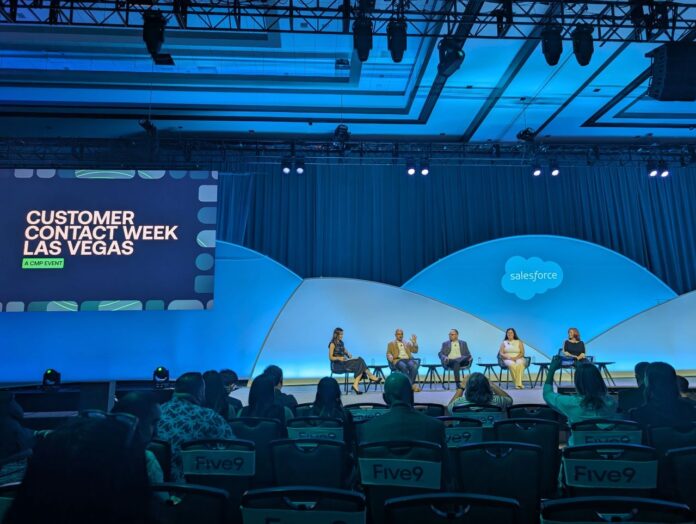
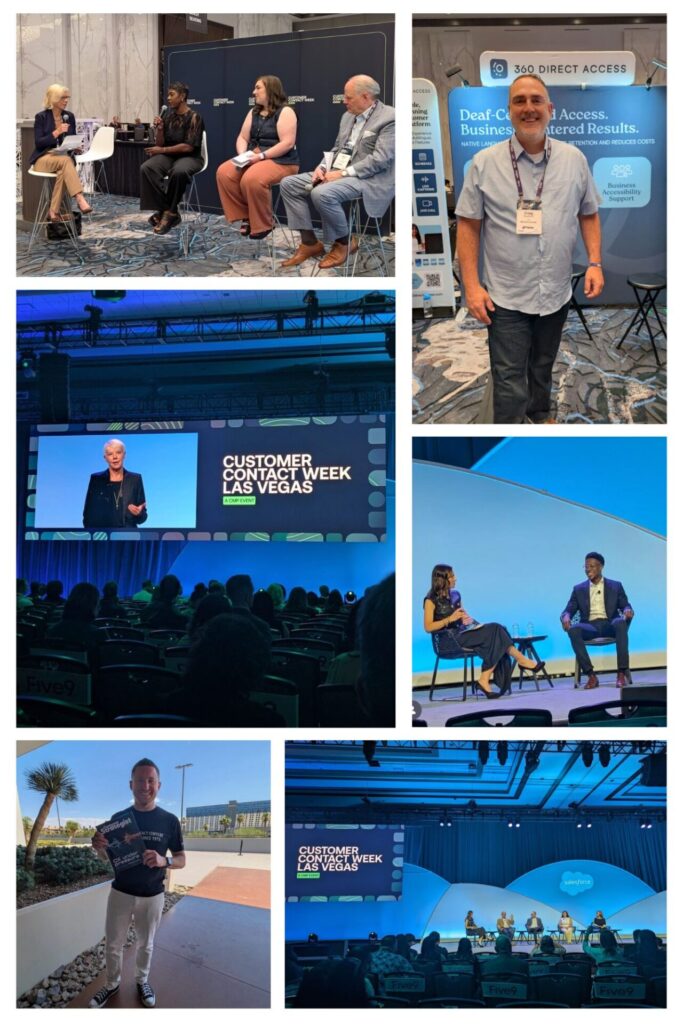
CCW show report: Are you ready for your AI coworker?

One thing was clear at this year’s Customer Contact Week event in Las Vegas: AI has moved from the hypothetical to something that’s firmly rooted in contact center operations. Conversations revolved around balancing the human and tech elements now that AI is a coworker, not a concept. 

Strong AI needs strong data 
Agentic AI was everywhere, as companies shared their latest virtual agent solutions and discussed ways to incorporate action-based AI tools into the contact center. The common denominator was a solid data foundation. “Everyone has AI, and people want to do it now,” said Scott Rohrer of Hexaware Technologies. “But it depends on if the data is ready.”

“Everything starts with data,” added Dexter Brown, vice president of global customer delivery at Dell Technologies. “The more we can curate it, the better our agents will be.”

There’s more to AI than just tech
In these uncertain economic times, some brands are looking at AI solely to drive down costs. But that’s the wrong way to think of it, said Matthew Clare of Google AI. 

“Cost cutting isn’t the best value proposition for AI,” he said. “The real business value is driving retention, loyalty, and improving CSAT.” 

Korissa Singh of Ujet agreed. “Deflection and cost savings are still important but shouldn’t be the goal of AI investment.”

James Bednar, head of innovation at TTEC, encouraged CX leaders to rethink how they approach AI. “Manage your AI agents like your human agents, not an IT project,” he said.

Read more about CCW in our upcoming issue of the full Customer Strategist Journal, out next month.​​