
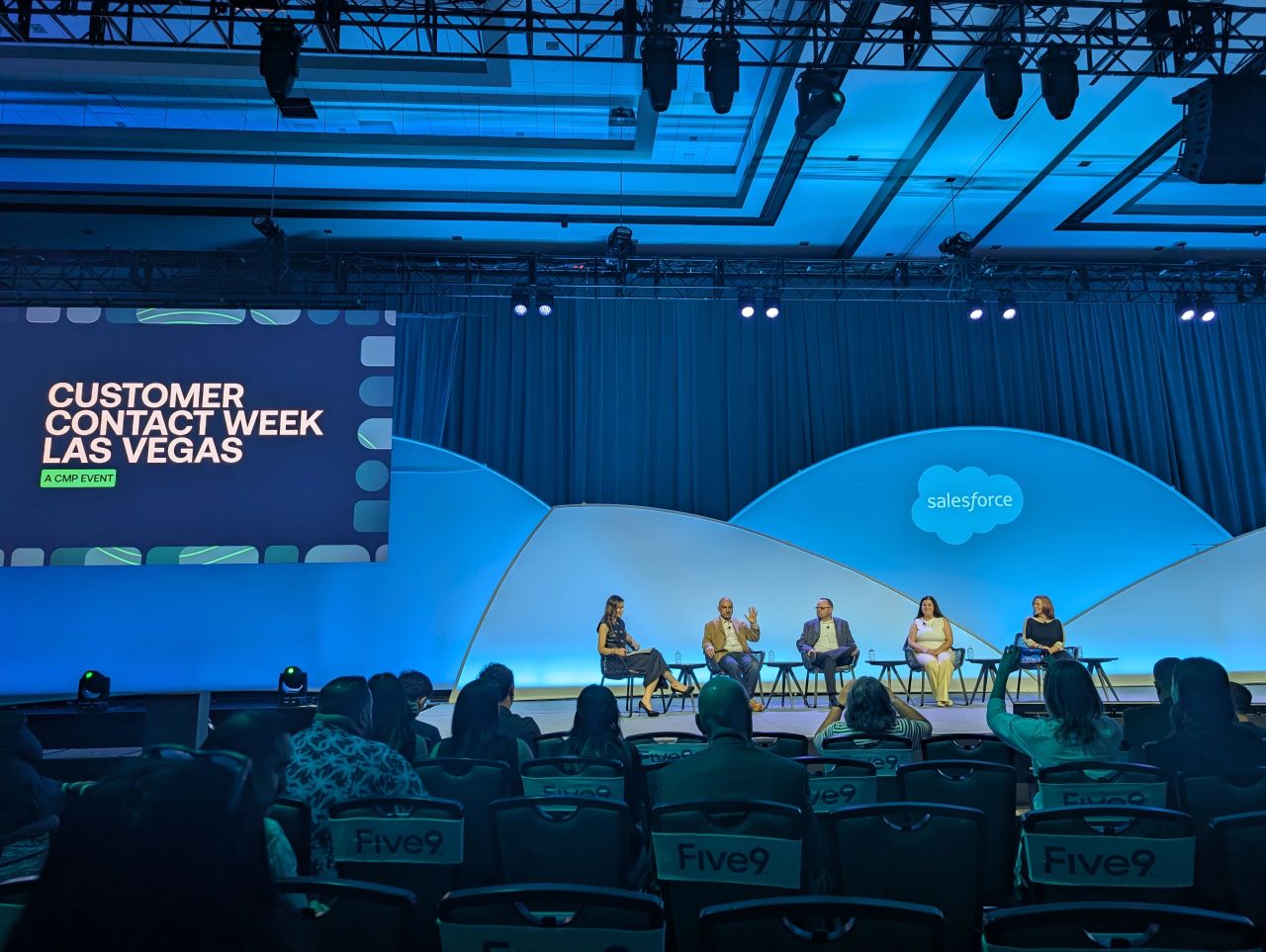
For all the talk about AI at the recent Customer Contact Week (and it was everywhere), many discussions homed in on the human element of customer experience. Striking the right balance of humans and technology in the contact center, associates’ evolving roles in the AI age, empathy in CX, and the need for tech investments to be customer-centric were all hot topics at the Las Vegas event.
CCW took place June 22-25 and drew an estimated 5,000 attendees. A lot of sessions focused on AI – how best to deploy agentic AI, how to foster an environment of innovation, how to build trust in AI among associates and customers – but many CX leaders also were eager to discuss humans’ role in delivering great experiences.
The consensus was clear: AI isn’t replacing humans in CX but it’s drastically changing their jobs, and brands still have some work to do in finding the right partnership between the two.
Frontline associates are feeling AI’s impact
Many brands have rushed to integrate AI into their contact centers, but the impact it’s having on frontline associates isn’t yet clear, according to experts from Customer Management Practice (CMP), the organizer of CCW.
“Agents’ attention today is being pulled in a million different directions,” said Audrey Steeves, lead content analyst at CMP. They’re carrying an “intense cognitive load,” having to learn and navigate a lot of new technologies. At the same time, they’re handling increasingly complicated customer interactions as the simple ones are being deflected to AI.
An abundance of new tools brings lots of potential but also challenges.
“When you’re bouncing between systems, guess what you’re not doing? Really listening to those customers,” said Brian Cantor, CMP’s managing director of digital.
Increasingly, associates feel over-burdened and under-prepared for their evolving roles, he said.
“If we don’t make it easy for them, they can’t be valuable for the customer,” Cantor said.
Cantor and Steeves presented new research from CCW Digital that found:
- 74% of leaders admit associates must jump between multiple systems during a single customer interaction
- 52% of leaders recognize that employees spend too much time on non-interaction work, such as knowledge lookups or data entry
- 49% of leaders see the excessive number of approvals required to deliver “above and beyond” resolutions as an operational challenge
- 96% of leaders say improving employee experience and productivity is a priority when evaluating and buying new contact center technology, yet just 27% of teams provide their frontline agents with a unified, single source of truth
- Only 32% of leaders have a comprehensive, real-time view of how all individual associates are performing
Against this backdrop, CMP found, 37% of customers believe customer experiences have gotten worse since last year and most CX leaders (68%) believe supervisors and managers aren’t yet prepared to manage the next-generation associate.
37% of customers believe customer experiences have gotten worse since last year
Unifying tools and technologies and providing associates with a “single source of truth” should be a priority for brands going forward, said Steeves.
Customer, associate trust are paramount to AI success
At a standing-room-only panel about trust and transparency in agentic AI, panelists spoke about the need for customers and associates alike to buy into a brand’s AI efforts. Tools won’t work if associates don’t want to use them or customers don’t trust them, they said.
When audience members were polled, most said they were in the midst of deploying agentic AI. Many were in the pilot phase, and some had moved into full-on deployment. Panelists urged them to embrace and learn from what doesn’t work as much as what does work – and to take employee feedback into account when choosing and implementing tools.
AI is a solution that should be deployed intentionally to solve a problem, said Amanda Pennington, vice president of sales enablement at UnitedHealth Group. People will trust technology more if they believe it will help them.
“Trust is built in consistency,” she added.
She and other panelists shared about the experimenting their companies have done and mistakes they made along the way in their AI journeys: a rollout that was too fast, trying to implement new tools across too large of a team at once, and assuming different customer profiles would want to use AI in similar ways, among others.
Trying to take on too much at once is a common misstep, said Lisa DeFalco, CEO of Anna. “Start small, prove the case, move on,” she advised.
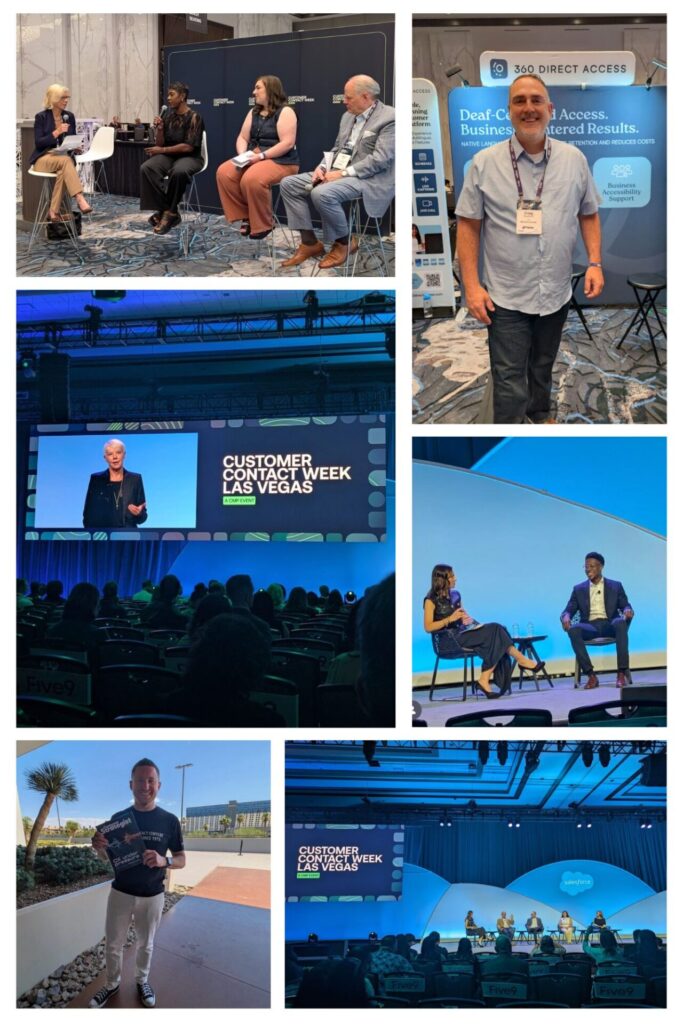
Seen and heard around CCW
With more than 100 panel discussions, workshops, and breakout sessions, there were many perspectives about humans’ role in CX to take in at CCW. Here’s a sampling of what the Customer Strategist Journal team heard while we were there:
“You have to consider more than the short-term gain or win [with AI]. You have to consider the long-term ramifications.”
– Brian Cantor, managing director of digital at CMP
“What you need is the core following of the brand to come back and enjoy following you again. A lot of people cracked their first crab legs at Red Lobster. The history and the love is there. Everybody has those stories. That’s a good way to galvanize the organization; it means a lot to a lot of people. My focus is on restoration versus evolution.”
– Damola Adamolekun, CEO of Red Lobster
“I don’t want to go to any frontline person and say, ‘You have three minutes to solve the problem,’ because they’re not going to be curious. They’re not going to ask questions.”
– Heather Arthur, vice president of global client experience at Scotiabank, on why AHT is no longer on the company’s metric scorecard
“You never know what someone is carrying. The employee who may seen distracted may have sat in a hospital all night. The customer that seems angry, even excessively so, may have just received the worst phone call of their life. They’re not looking for perfection. They’re looking for another human being, someone who reminds them, even for a moment, that they matter.”
– salon owner, hair stylist, and television personality Tabatha Coffey
“The worst experience for your customers is not delivering on what you say you’re going to do. And the thing that travels the fastest in CX is word of mouth.”
– Shantel Love, global vice president of customer success, clinical and school assessment at Pearson
“People and our customers are our biggest assets. We have to be crystal clear with where we are on AI and communicate clearly to get people on board. Some people are scared and need training on AI. Jobs will change, but people and their judgement and decision making are still needed.”
– Tiffany Meriweather, chief administrative and legal officer at Five9